Market stress, measured.
Markets telegraph stress through volatility, corporate spreads and liquidity. Each is noisy on its own. Read together, they become a signal.
Market stressMacro modelsDecision context
One composite stress signal.
Every allocation discussion happens against a market backdrop, and the backdrop is usually described in adjectives: nervous, calm, fragile. Adjectives are hard to govern with. The Macro Outlook replaces them with measurements.
Cadran tracks proprietary stress indicators across volatility, corporate spreads and liquidity conditions, and combines them into a composite signal read against its own history. The point is not to predict the market. It is to know, with numbers, how stressed the environment actually is compared to where it has been, and to watch that change as conditions develop.
Dedicated macro models for fixed-income and equity portfolios translate the same picture into the terms of what you hold. The result is context that strengthens allocation and rebalancing decisions, delivered in the same auditable way as every other figure on the platform.
What the outlook is built on
Market stress
Proprietary stress indicators tracked continuously and combined into a single composite signal, read against its own history.
Macro models
Dedicated models for fixed-income and equity portfolios, so the macro picture is read in the terms of what you actually hold.
Decision context
The outlook feeds allocation and rebalancing discussions with measured context, not trade signals or predictions.
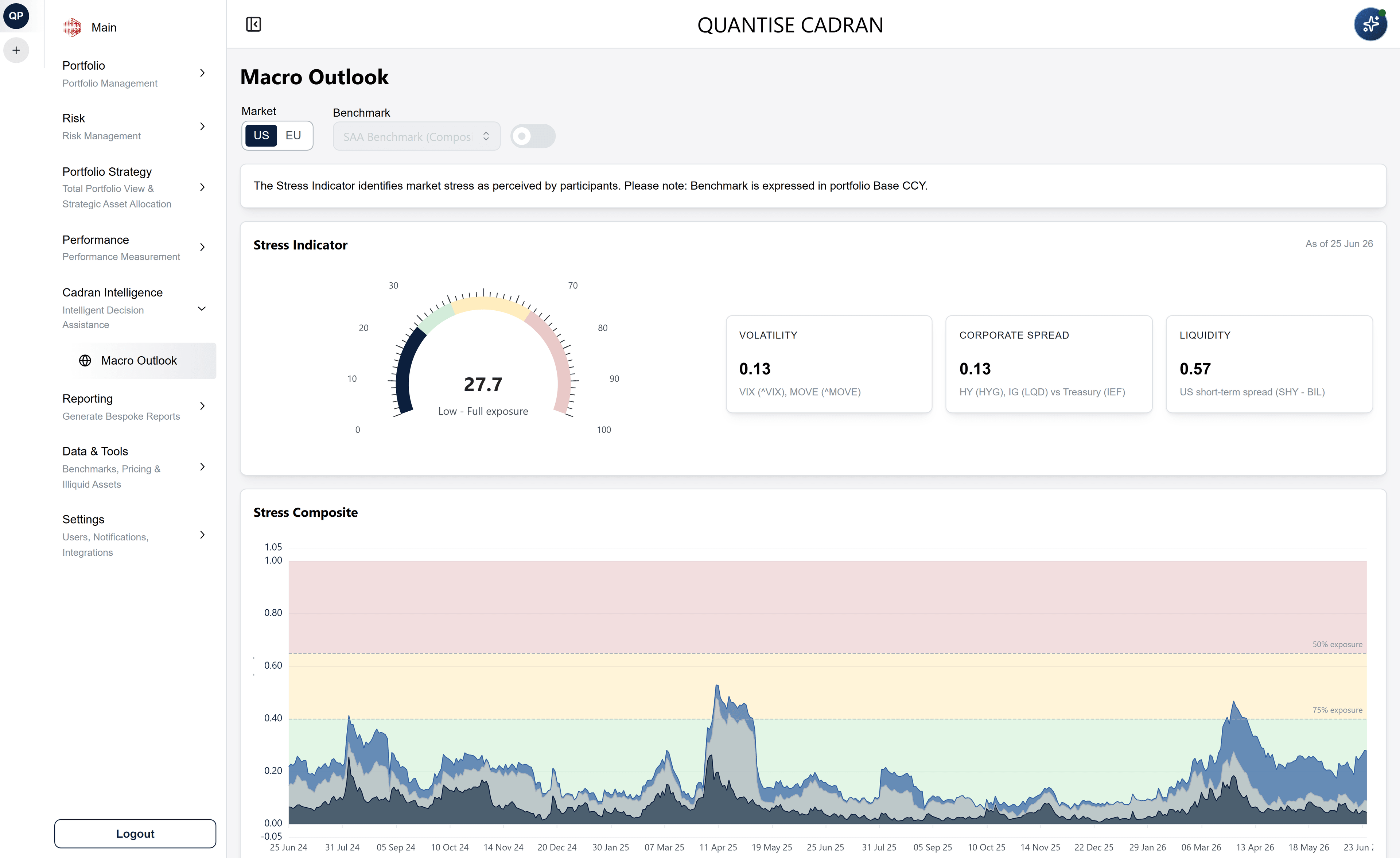
The Macro Outlook in Cadran · stress indicator and composite history
Put numbers on the backdrop.
The Macro Outlook runs continuously in Cadran, beside the portfolio it gives context to.