The anchor, continuously measured.
A strategic allocation is agreed once and lived with every day. Cadran keeps the book measured against it, and shows drift while it is still small.
Current versus strategicDrift versus targetBenchmark comparison
The strategic allocation.
The current allocation.
The distance between them is drift.
A strategic asset allocation is decided deliberately, then has to survive markets that move every day. Nothing has to be traded for the book to move away from it: prices alone are enough. Drift is what allocation looks like when nobody has made a decision.
Cadran keeps the comparison standing. The current allocation is set against strategic targets, asset class by asset class, and the drift between them is reported as it develops rather than discovered at the next review. Benchmarks sit alongside, across every asset class in the book, so the strategy and the yardstick it is judged against are read in the same view.
The SAA remains the anchor of the whole process. It is the reference the Total Portfolio View is measured against, and it defines the sub-asset classes performance attribution is reported in. Keeping the current book measured against the strategy is what lets every other view in Cadran be read in the same terms.
What the view keeps in sight
Current versus strategic
The allocation you hold today, set beside the allocation you agreed, asset class by asset class.
Drift versus target
The gap between the two, reported by asset class and watched as it develops rather than discovered at the next review.
Benchmark comparison
Multi-asset class support with the benchmark alongside, so the strategy and the yardstick it is judged against are read in one view.
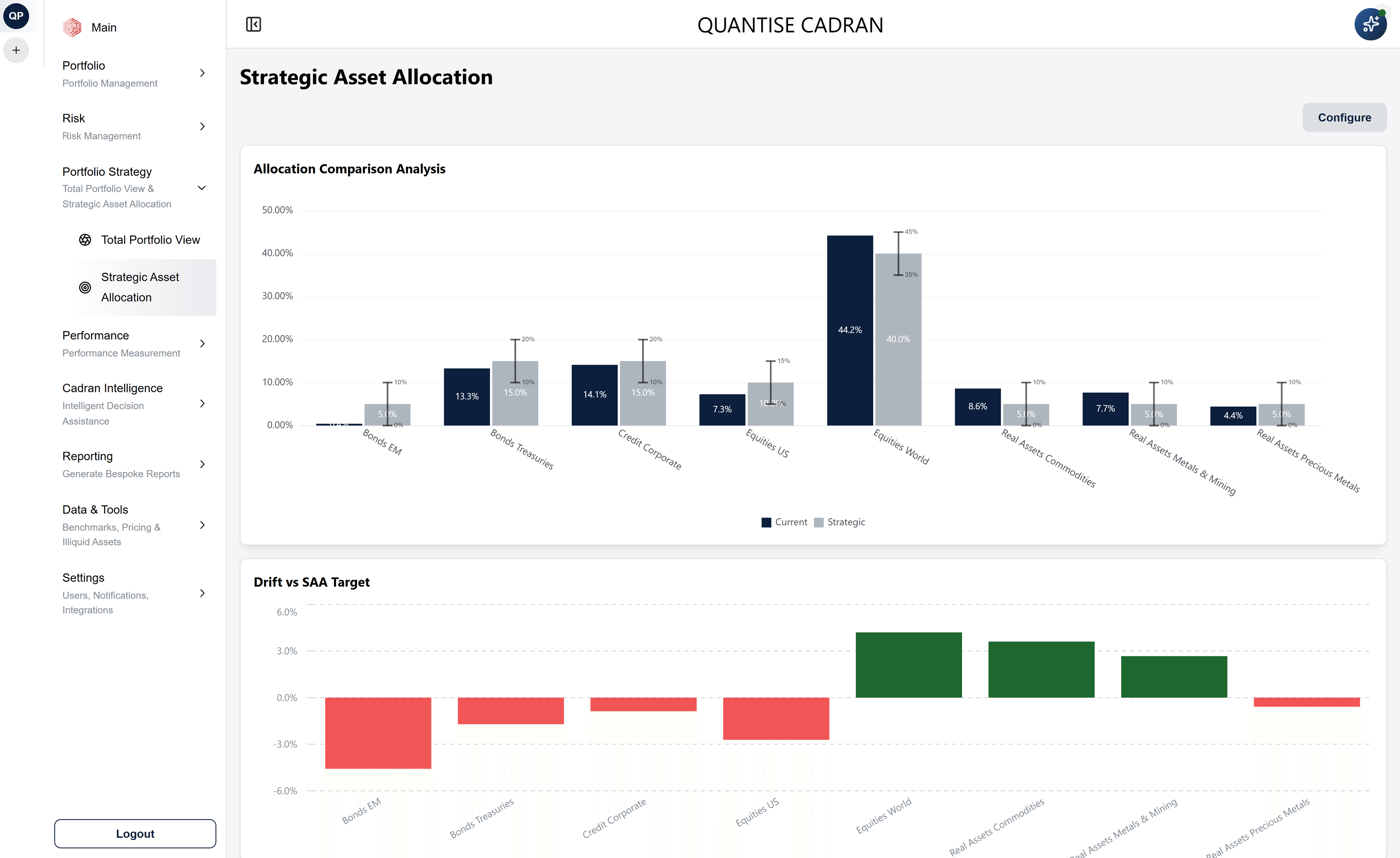
Illustrative data: synthetic portfolio, not a client book.
Keep every decision anchored.
Cadran compares the current allocation against strategic targets, across every asset class in the book.